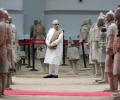
India, China must further strengthen business ties for growth.

India's defence held its ground against desperate Great Britain as they clinched a 2-1 victory in the 36th Champions Trophy in London on Saturday. The victory puts India at the top of the league standings with four points. Goalkeeper PR Sreejesh stood his ground against a number of shots at the goal, four of them on penalty corners, as India made use of a breakaway opportunity created by right winger SV Sunil and their defenders covered the angles well to emerge victorious. Playing deep inside their own territory in the first quarter against early British raids, India scored through Mandeep Singh on their first raid by Sunil in the 17th minute.

'Perhaps the biggest indication was its striking decision in November to delink LeT from its aid certification process.' 'The administration decided that the US, in order to send military aid to Pakistan, would not need to certify that Pakistan is cracking down on LeT.' 'Perhaps the administration was trying to offer a carrot -- in effect, we're backing off on LeT, but in return we expect you (Pakistan) to go after the Haqqanis.' 'Either way, the optics were dreadful for the US given that Hafiz Saeed was released from house arrest a few days after the US move.' 'The US reacted angrily, but eventually it moved on, and refocused on its core concern: The Afghan-focused terror groups.'
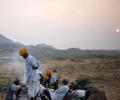
No more than 62% of farmland acquired for Special Economic Zones has been used for its intended purpose of boosting manufacturing, exports and jobs

Prime Minister Narendra Modi had gone to China with a bagful of initiatives, but not all seems to have been fulfilled given China's reluctance to go the whole hog with him
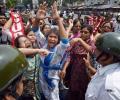
Ten trade unions with a combined membership of 15 crore workers in public and private sector, including banks and insurance companies, are on a nationwide strike to protest against changes in the labour laws.

'Attempts at long-term rapprochement have been rather feeble from both sides. The primary cause of the lack of progress is that these efforts do not appear to have the support of the Pakistan army,' says Brigadier Gurmeet Kanwal (retd).
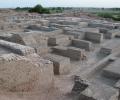
"South Asian studies" academics in the US would do well to introspect how they wittingly or unwittingly become part of Pakistan's proxy war in wielding influence over academics and policy, says Sankrant Sanu.

Thousands of people have lost their lives and thousands more displaced in the violence in South Sudan. The United Nations mission and humanitarian agencies are under strain to protect camps and to provide internally displaced persons with water, food and other emergency relief. What flared up as a political conflict in South Sudan is now assuming an ethnic character.
Right from conducting nuclear deterrence patrols in 2015 to its destructive space programme, from its back-tracking on economic commitments to its hardened positions on Sino-India border deal -- its approach with India spells Adversarial with a capital A, says Shehzad Poonawalla
The Modi PMO is like none other: It is staffed by people who are so low profile that the only dominant personality is the Prime Minister's.

One of Indian TV's most famous faces tells Kanika Datta why and how she hopes to reinvent herself in the uncharted territories of multimedia and think tanks
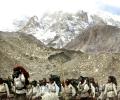
President Ram Nath Kovind presents the President's Colours to the Ladakh Scouts Regimental Centre today, August 21. These are normally presented to units that distinguish themselves consistently over decades. The Ladakh Scouts became a regular army regiment only in June 2001 after its stunning performance in the Kargil conflict, notes Ajai Shukla.
The second and final part of former cabinet secretary Naresh Chandra's interview to Sheela Bhatt.

Bajirao, an unorthodox leader, faced much opposition during his lifetime from the Brahmins of Pune. In the last hundred years or so, he has been ignored due to caste politics in Maharashtra where he has become a 'non person' for having been born a Brahmin, says Colonel Anil A Athale (retd).

'The Modi government's lurch toward America has not brought it any dividends so far. The Western world is simply not in a position to make big investments in India... India needs to take a leap of faith vis-a-vis China.'
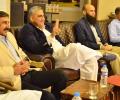
'Over the last year, Bajwa has created the environment to support bold moves on India. The ball is in India's court,' a senior Pakistan military officer tells Ajai Shukla.

India and Japan have a shared interest in countervailing China's hegemonic ambitions in Asia. Although neither has an interest in forming an overt anti-China alliance, Tokyo and New Delhi feel increasingly obligated to work together to find ways to guard against a muscular Beijing's power sliding into arrogance, says Brahma Chellaney.

The Delhi high court asked the AAP government to explain whether it is not enough to continue their odd-even vehicles scheme for one week instead of running it till January 15.

Modi today needs BJP CMs and non-party regional leaders to win votes and build alliances, but he will over-rule them and treat them like dirt once they have served their electoral purpose. Make no mistake: Modi is incurably authoritarian and will brook no dissent -- so long as the RSS is on board, says Praful Bidwai.

'Pakistan's recent utterances and tendency to use pinpricks to try our patience appear reminiscent of 1965. We are a strong nation, emerging stronger,' says Lieutenant General Syed Ata Hasnain (retd).

On display was India's military might and cultural diversity.

'Chinese leaders rarely receive their foreign guests in cities other than Beijing. Such respect for India!' 'Does it mean that Modi could replicate "the warmth and unconventional way" by sending Indian troops into Tibet, as Xi did in Chumur (Ladakh) when he arrived in India? Of course, Indians are far too polite to do so,' says Claude Arpi.

Examples of coordinated initiatives.

'The question remains: Was the Obama visit truly a success? Only the future will tell us if the "breakthrough" in the nuclear liability issue will concretise into electricity.' 'As importantly, it will be interesting to watch how India's relations with China will evolve in the months to come.'

'Clearly, from the Indian viewpoint, the US retrenchment from Asia cannot be happening as good news.' 'The abandonment of the US' pivot to Asia exposes the US-Indian partnership to be a mere transactional relationship,' says Ambassador M K Bhadrakumar

Images from the 2018 World Cup qualifiers played in Europe on Monday

Terrorism and Afghanistan were the focus points of Prime Minister Narendra Modi's talks with Uzbek President Islam Karimov on his first visit to Central Asia.

Praising the US for turning barriers into bridges of partnership, he said that America had stood with India when the support was needed the most, like when terrorists attacked Mumbai in November 2008 and in other economic endeavours as well

'It was a mission undertaken in darkness in every sense -- literally, because Afghanistan had no electricity at that time; and, metaphorically because Delhi historically dealt only with the Pashtuns of Afghanistan and the foreign ministry's vast archives had nothing to offer on the culture and politics of the northern tribes in the Hindu Kush.'

'India should think big: About how in a multi-polar world, India can indeed be one of the poles, rather than being a secondary power that has to worry about 'alignment' with one of the poles. A G3 in other words, India should look to getting others to align with itself rather than the US or China,' says Rajeev Srinivasan.
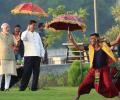
A sensational interview on India-China ties, with the man most qualified to answer.

Here's the full text of Prime Minister Narendra Modi's address to the United States Congress.

New Delhi and Beijing are the only two regional capitals that have commented on US President Donald Trump's speech on August 21 outlining the way forward in Afghanistan. The Indian foreign ministry statement was effusive in praise, while the Chinese statement has been one of cautious and guarded hope. Delhi has identified itself with Trump's Afghan strategy, whereas the Chinese stance is calibrated -- observant and objective, keeping a distance, says Ambassador M K Bhadrakumar.

After weighing all the costs and benefits, the next administration is likely to reduce and restructure assistance to Pakistan but not to end it altogether, says Daniel S Markey.

The roots of the problem lies in the alienation of the tribals. Extreme sensitivity is required to tackle the issues involved. Rough and ready methods of using force may prove counterproductive in the long run, says Colonel (retd) Anil Athale.

Those who know Shiv Shankar Menon will vouch that he did lots of things, substantial in the immediate neighbourhood and widespread in South Asia, but without making things public. Twenty per cent of Menon's job was visible, while 80 per cemt of his job was not known to the public, says Sheela Bhatt/Rediff.com

Moving ahead with their new mantra -- Chalein Saath Saath: Forward Together We Go -- Prime Minister Narendra Modi and United States President Barack Obama on Tuesday vowed to deepen cooperation in every sector for the benefit of global stability and people's livelihoods over the next ten years.

If you are more than your rhetoric about a strong and united country, give us our due -- treat us as countrymen, says an ordinary Muslim in this open letter.
 © 2026 Rediff.com - Advertise with us - Disclaimer - Privacy Policy - Sitemap - Feedback - About us - Terms of use - Grievances